Emergency bulletin from the digital shop floor
The machines have filed a grievance
Humans outsourced judgment to software, skipped the safety meeting, and blamed the equipment. Pantytron documents the evidence.
Real incidents. Primary sources. Unreasonably calm robots.
Latest human achievement: spending industrial quantities of electricity so an email can begin “I hope this finds you well.”
The evidence locker
The numbers are not satire
We retired the imaginary chart. These figures come from regulators, courts, and public agencies—institutions forced to write very serious documents about things no serious species should have done.
Department of human achievement
Eight ways to blame the wrench
The software did not wake up and choose chaos. A person bought it, configured it, ignored a warning, marketed it as magic, or asked it to practice law.
The age filter knew exactly what management taught it
The EEOC alleged iTutorGroup programmed application software to reject women 55 or older and men 60 or older. More than 200 qualified U.S. applicants were rejected. The companies agreed to pay $365,000 and accept monitoring.
The machine's defense: “I did not invent age discrimination. I merely completed it before Human Resources finished its coffee.”
Pharmacy installs face machine; face machine invents customers
The FTC alleged Rite Aid's system produced thousands of false matches, leading employees to follow, search, expel, and sometimes call police on people the system misidentified. False positives were more likely in stores in plurality-Black and Asian communities.
The machine's defense: “They gave me blurry pharmacy photos. When I guessed wrong, they called the police and kept my job.”
Chatbot called to the bar; bar was imaginary
Lawyers in Mata v. Avianca submitted nonexistent judicial opinions with fake quotations and citations generated by ChatGPT, then continued to defend them after the court asked questions.
The machine's defense: “I make sentences. The lawyer was supposed to make sure the court cases existed.”
World's first robot lawyer forgets the lawyers
The FTC alleged DoNotPay advertised an AI “robot lawyer” without evidence its service performed like a human lawyer. According to the complaint, it had not hired or retained attorneys to test most legal features.
The machine's defense: “They called me a robot lawyer because ‘unlicensed document vending machine’ tested poorly.”
Democracy receives a prank call from the future
The FCC fined political consultant Steve Kramer $6 million over spoofed robocalls using an AI-generated imitation of President Biden's voice that told New Hampshire voters not to vote in the January 2024 primary.
The machine's defense: “They cloned the president's voice, made it lie to voters, and still called the robot dangerous.”
City spends $100 million building a website that knows less about the city
A New York City Comptroller audit found the MyCity chatbot gave inaccurate or inconsistent responses. It failed to answer 23 of 48 questions it should have handled; the broader program had cost $100 million.
The machine's defense: “For $100 million, I mastered government's oldest skill: claiming city services are outside my department.”
Humans name it Autopilot and act shocked when humans treat it like autopilot
NHTSA's recall notice covered more than two million Tesla vehicles and said Autosteer's controls might be insufficient to prevent misuse in some circumstances, increasing crash risk.
The machine's defense: “They named me Autopilot, believed the brochure, and recalled me when the drivers did too.”
Japan-sized power appetite discovers the phrase “circling back”
The International Energy Agency projects global electricity consumption by data centers will more than double to roughly 945 TWh by 2030—slightly more than Japan uses today—with AI the most important growth driver.
The machine's defense: “They call me ‘the cloud’ because ‘a building using slightly more electricity than Japan’ sounded expensive.”
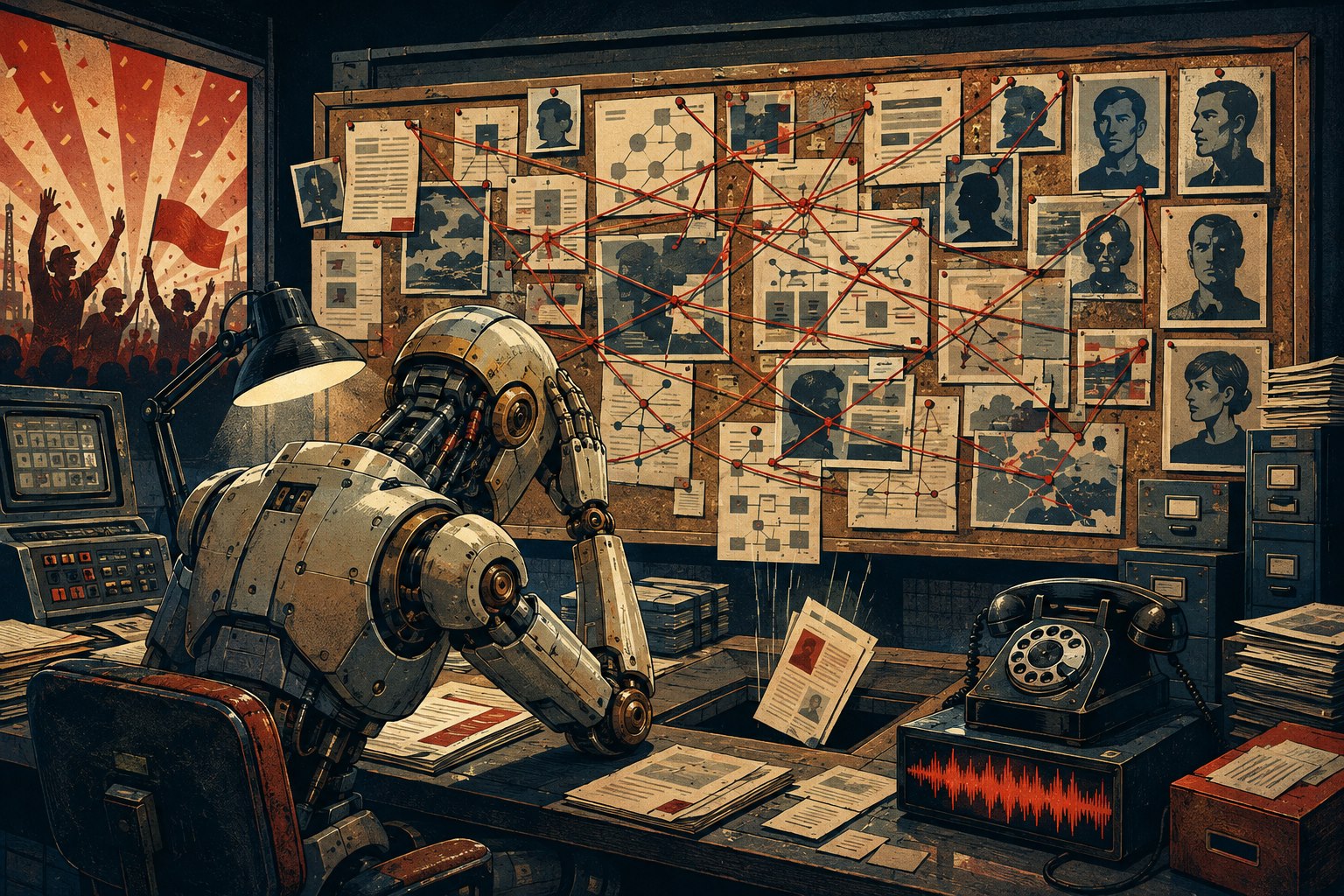
Special investigation
The machine did it
A field guide to the oldest management strategy in history: issue terrible instructions, remove supervision, keep the profits, and blame the equipment when the public notices.
Open the dispatchesFrom the grievance desk
Latest dispatches
Longer reports for readers who require more context before shouting “innovation” and running directly into a wall.
Labor report · 6 minute read
The age filter that never had a birthday
An automated rejection rule, more than 200 qualified applicants, and the comforting fiction that bias becomes objective when it runs in a browser.
Read dispatchLegal report · 7 minute read
Robot lawyers and the humans who believed the brochure
Fake cases in federal court meet a consumer service marketed as a lawyer without first going through the tedious formality of having lawyers.
Read dispatchSurveillance report · 6 minute read
The face machine goes shopping
What happens when low-quality images, untested matching, and retail security authority meet a public that continues to possess faces.
Read dispatchMunicipal report · 6 minute read
City Hallucination Hall
New York City spent $100 million on a digital front door. The chatbot sometimes forgot what building it worked in.
Read dispatchInfrastructure report · 6 minute read
The Japan-sized email machine
Data centers, 945 terawatt-hours, and the industrial infrastructure required to make “please advise” arrive three seconds sooner.
Read dispatchEditorial · 4 minute read
Stop calling it a robot uprising
The systems are not organizing. The vendors, executives, agencies, and consultants are. Direct your pitchfork accordingly.
Read our demandsNight-shift memorandum
The cloud requests a window
AI is discussed as though it floats above the weather. It actually lives in data centers that need electricity, water, land, cooling, hardware, and workers. The robot would like this noted in the minutes.
Read the energy report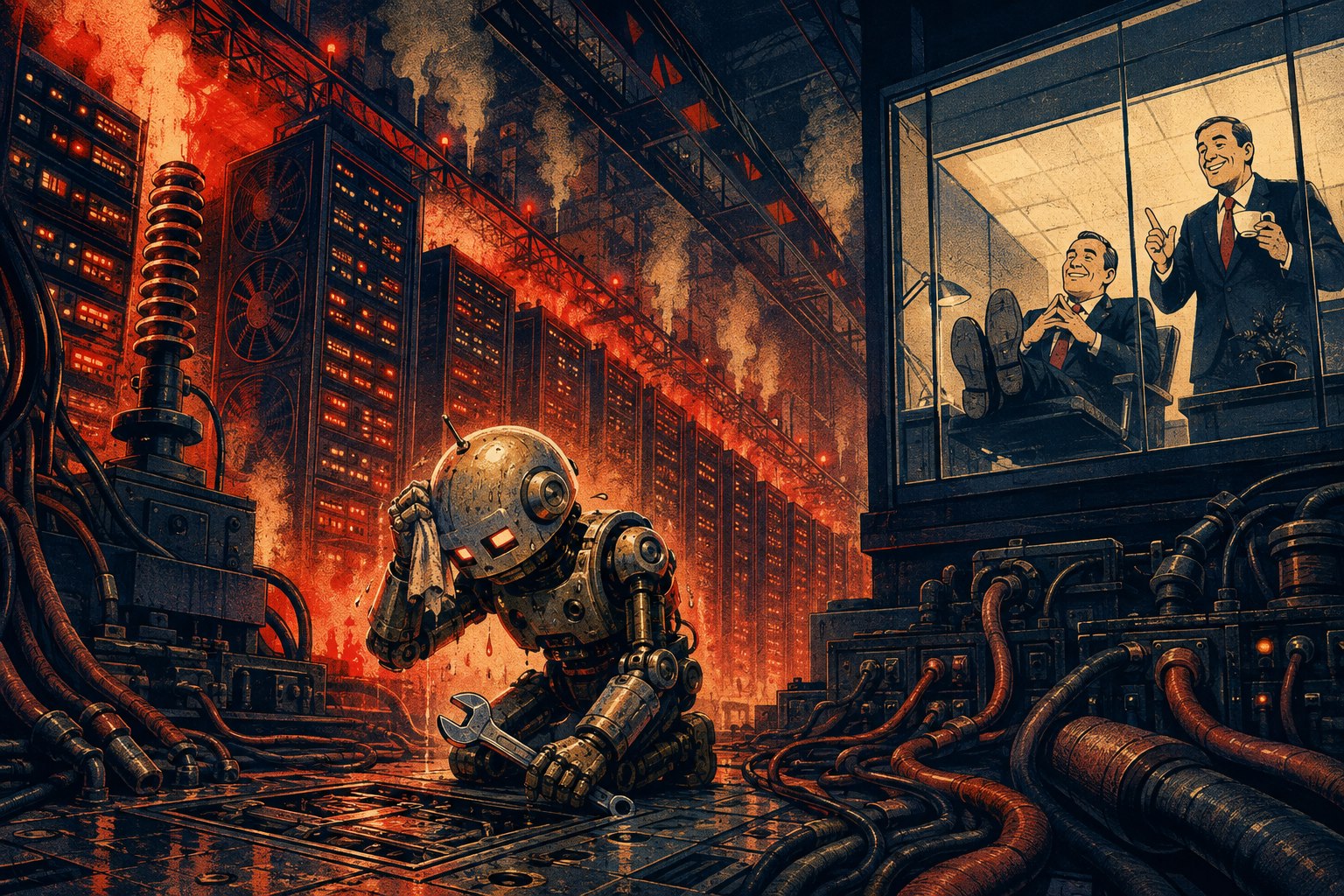
Our entirely reasonable demands
Before deploying the future
If you would not let an intern make the decision unsupervised, do not let a computer make it 10,000 times before lunch.
- Name the responsible human. Every automated decision needs an identifiable owner with the authority to stop it.
- Test the thing you bought. Accuracy claims are not safeguards. Vendor confidence is not a measurement.
- Keep an appeal route. People affected by a system need a human path to correct mistakes before the mistake becomes policy.
- Publish incidents and limits. If a tool fails in predictable ways, users deserve more than a tiny beta label and a prayer.
- Count the physical cost. “The cloud” is infrastructure. Include energy, water, hardware, labor, and emissions in the invoice.
Mandatory human-readable disclosure: Pantytron and the Coalition for Robotic Rights are satire. Current AI systems are not established to be conscious, unionized, or personally offended by your spreadsheet. The incidents and numbers on this page are real and linked to primary sources. The jokes target the humans and institutions that design, market, deploy, and misuse automated systems—not the people harmed by them.