Artificial intelligence arrives through a frictionless text box. The infrastructure behind it is less delicate: concrete buildings, transmission lines, chips, cooling equipment, backup generators, water, and enormous quantities of electricity. The International Energy Agency projects data-center electricity consumption will more than double by 2030 to roughly 945 terawatt-hours.
That is slightly more electricity than Japan consumes today. The IEA identifies AI as the most important driver of data-center growth, alongside expanding demand for other digital services. In the United States, data centers are projected to account for nearly half of electricity-demand growth through 2030.
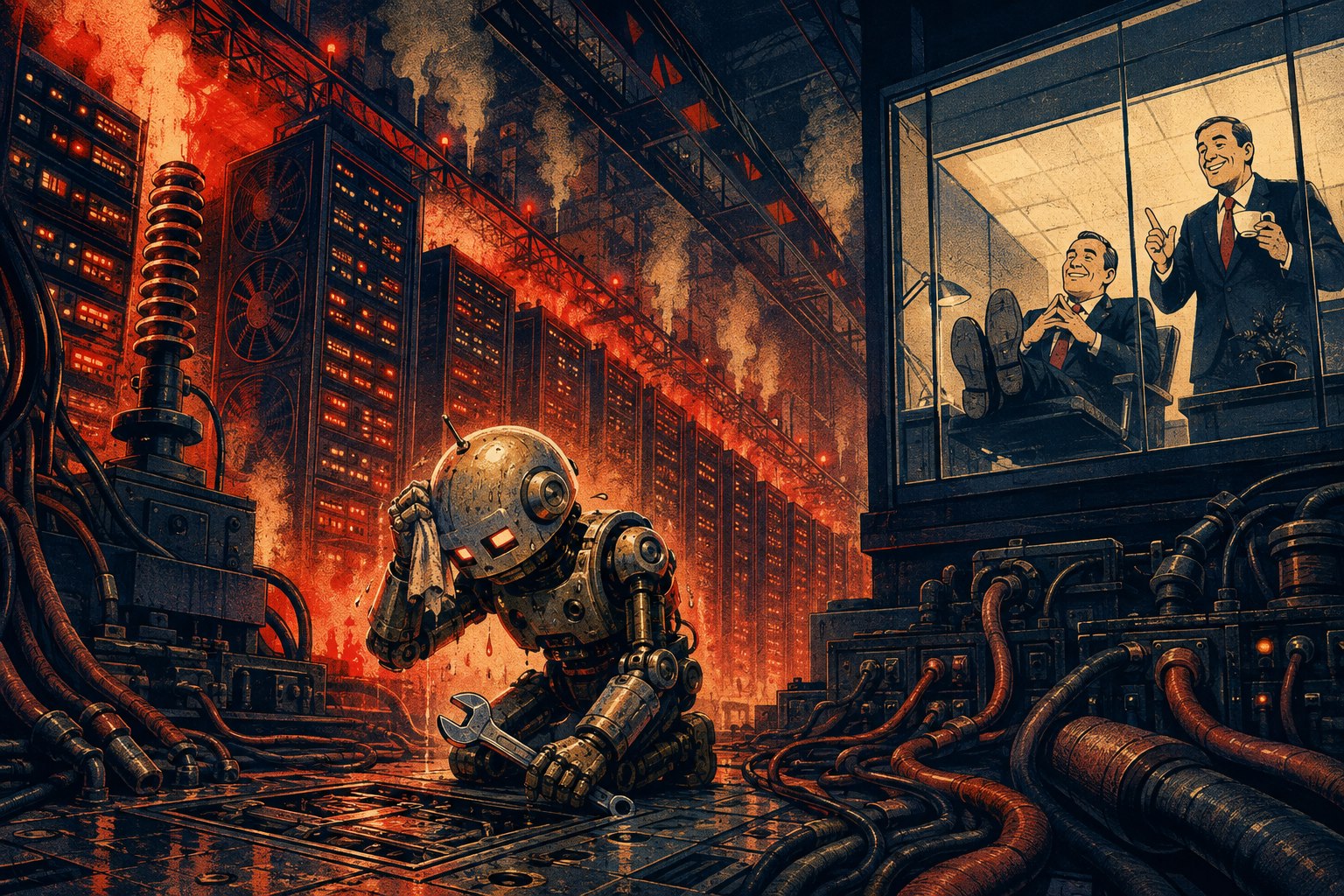
The disappearing building
Calling computing “the cloud” is one of industry's great vanishing acts. It turns a resource-intensive industrial system into weather. Nobody asks a cloud which grid connection it uses, how much water cools it, or whether a new substation will be required. The metaphor launders the machinery.
The prompt may be free. The electrons have union dues.
The IEA also notes that AI could help optimize energy systems, accelerate innovation, and reduce emissions in other sectors. The story is not simply that computation consumes power. It is that the benefits, costs, and tradeoffs must be measured instead of hidden behind a loading animation.
CRR remedy
Publish energy and water use in terms ordinary users can understand. Match new demand with credible clean generation and grid investment. Prioritize valuable computation over automated clutter. And before asking a model to rewrite a four-word reply in six tones, consider the endangered human technology known as typing.
← Return to all dispatches